Showing posts with label Free Museums. Show all posts

Friday, June 29, 2012

Please Touch Everything!


Museum of Typhlology / Museo Tiflológico
06/28/12 – Calle la Coru
ña, 18

The Museum of Typhlology calls itself “a museum to see and touch,” making it a perfect destination for families with small children. Typhlology refers to the scientific study of blindness.  But rather than science, this museum seduces through art and architecture. I brought a newly-minted teenager, somewhat against his will.  I can say that he did not complain during the visit, and even let himself be photographed. 

Museum of Typhlology
The lady at reception actually smiled and emerged from her desk to describe the museum to us (in Spanish), a welcome quite different from most art museums.  Our favorite section contained sturdy, detailed models of famous cities, monuments and structures.  From the Eiffel Tower to the aqueduct of Segovia, all were available to explore with eyes and hands.  On a random Thursday, there were two blind visitors—an older gentleman and his guide dog, and an adolescent girl with her family—and about two dozen sighted people in the museum. 

Models included the city of Jerusalem, the Taj Mahal, the Cathedral of Santiago de Compostela, and the Alhambra.  Many of Spain’s most interesting buildings can be found here: El Escorial, the Royal Palace, the Mezquita of Toledo, and Gaudi’s famous Cathedral in Barcelona, to name a few.    

The Alhambra in Granada, Spain

Hagia Sophia, Istanbul
The  Royal Palace, Madrid
To my disappointment, Madrid’s Museum of Archaeology has been closed all year for renovations.  So I was excited to find in the Museum of Typhlology a full-scale reproduction of the stunning “Lady of Elche,” an Iberian funerary bust believed to date from the fourth or fifth century BCE.  

Dama de Elche.  Found near Alicante, Spain in 1897.

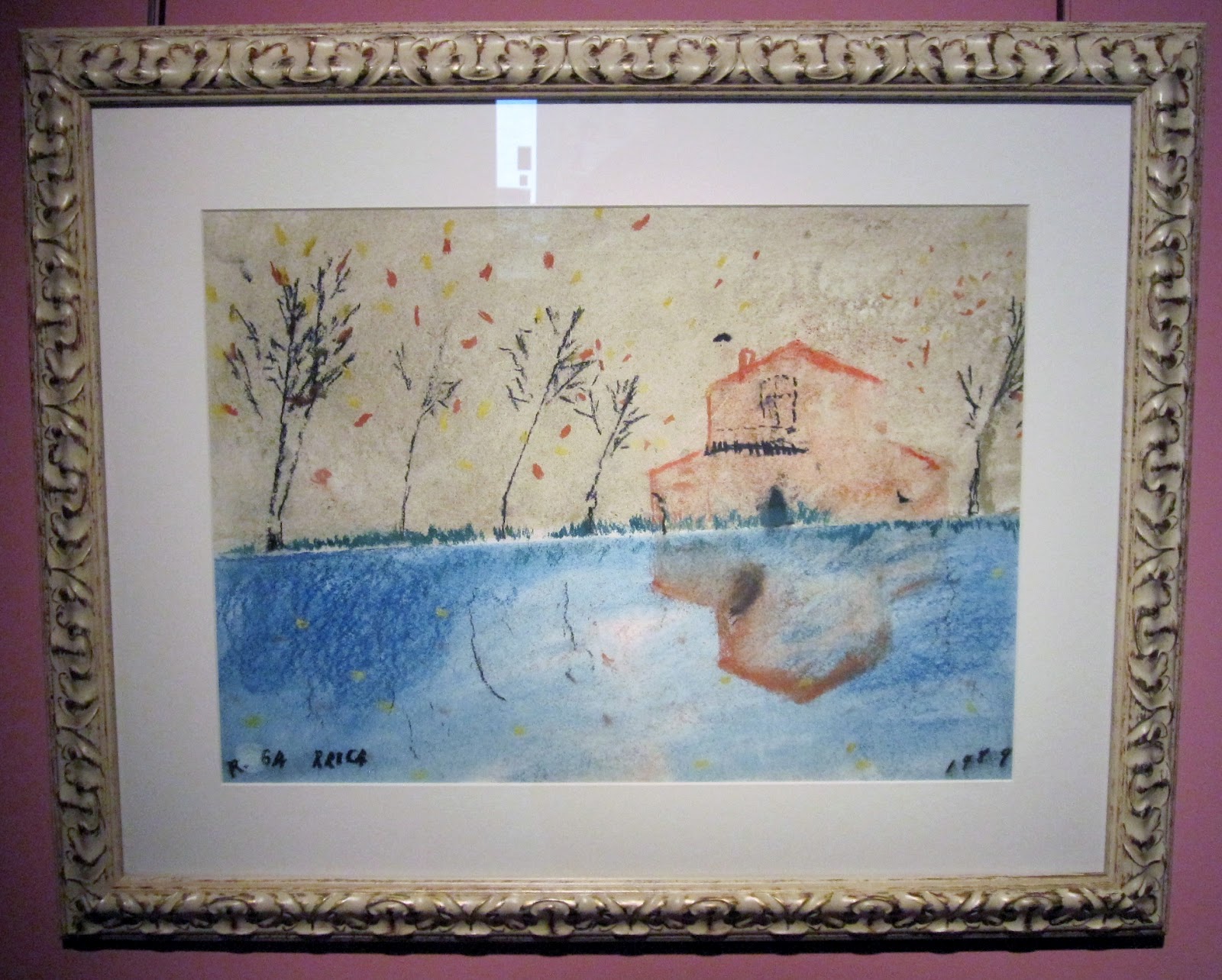
"Autumn" (1989) by blind artist Rosa Garriga

After pondering a collection of photos, sculptures, and paintings created by blind or visually impaired artists, we descended a staircase to the lower level of the museum.

There one can learn about the development of the Braille reading system, and machines that were invented to make life easier for the visually impaired: special typewriters, calculators, drawing boards, puzzles and voice recorders.

Machine for typing Braille as well as musical notation

The Museum of Typhlology is perhaps the only place in the world that hangs a frieze from the Parthenon at eye-level, and then invites you closer.


_________________________
Hours: Tues –Fri, 10 am– 2 pm, & 5 pm – 8; Sat. 10-2.  Address: Calle la Coruña, 18. Metro: Estrecho.  Located on the third floor of the ONCE building.  ONCE is a non-profit corporation devoted to improving the quality of life of blind and visually-impaired persons in Spain. 

Thursday, June 21, 2012

School's Out, and a New Museum Opens

Museum of Popular Arts and Traditions / Museo de Artes y Tradiciones Populares
06/21/12 – Calle Carlos Arniches 3-5

As June winds down, only a month remains of our year in Spain. S1 and S2 finished Madrid public school this week.  S2, in seventh grade, took part in an English bilingual program—the result of a new campaign to encourage English at a time when many young Spaniards will have to seek jobs abroad.  The school’s American teaching assistant, a recent college grad from Maryland, introduced his charges to lacrosse.  He brought all the equipment to Madrid.  Though lacrosse is a Native American sport, my son had never seen it.  On the last day of school, rival classes faced off in an epic match.

On the other hand, after only one month of language study, S1 plunged into tenth grade last fall: an all-Spanish curriculum of math, Latin, music, history, literature, computers, ethics, gym, and classical culture.  For two weeks he didn’t say a word, and teachers just thought he was slow—no one told them about the foreigner in their midst.  Now at year’s end S1 has passed his classes, and is fluent in Spanish. On a recent medical visit, I strained to understand the doctor while my son chatted away.  Later, he coolly informed me that the doctor's accent marked him as a northerner, from Basque territory.

My kids will tell you school is different here.  Some stories they bring home have raised my eyebrows.  A sampling:
A child received a "Fail" on a color-contrast exam, even though the teacher knew he was color blind.
Gym students were graded on whether or not they won. (Victors in a badminton match received 10 points, the losers: 0).
A boy was harshly admonished and sent to the principal’s office for the offense of involuntary flatulence.
Teachers told vulgar jokes.
During a biology lesson in English on the dung beetle, the struggling teacher used the word “shit” over and over, for lack of a more scientific term. 

They will never forget their year in Spanish public school.  We also saved sixty thousand dollars, the cost of educating two children for one year at the private American School of Madrid, not even including materials, lunch or transportation (I think I hear you gasp).

Meanwhile . . . a new museum quietly opened this month in El Rastro, Madrid’s old market neighborhood.  The free Museum of Popular Arts and Traditions occupies a true nineteenth-century corrala, typical housing for the masses in centuries past. The first corralas were built in the sixteenth century.

Museum blends into the surroundings on Calle Carlos Aniches, 3-5

Museum patio: the renovated 19th c. "corrala"

Footnote: La Quinta motel, USA, 1973


A corrala is characterized by several floors of open galleries surrounding a common patio. The ground floor would house workshops and stores, with dwellings above. I’m tempted to reference a two-story La Quinta motel from the 1970s, without the parking.  What the heck: for all I know, motel architecture owes everything to the corrala.


The museum draws on a collection of folk art, both rural and urban, of the Autonomous University of Madrid. Currently, an exhibit of the yearly festival cycle has been mounted: “El Ciclo Festivo del Año.”   

Carnival costumes from various regions of Spain

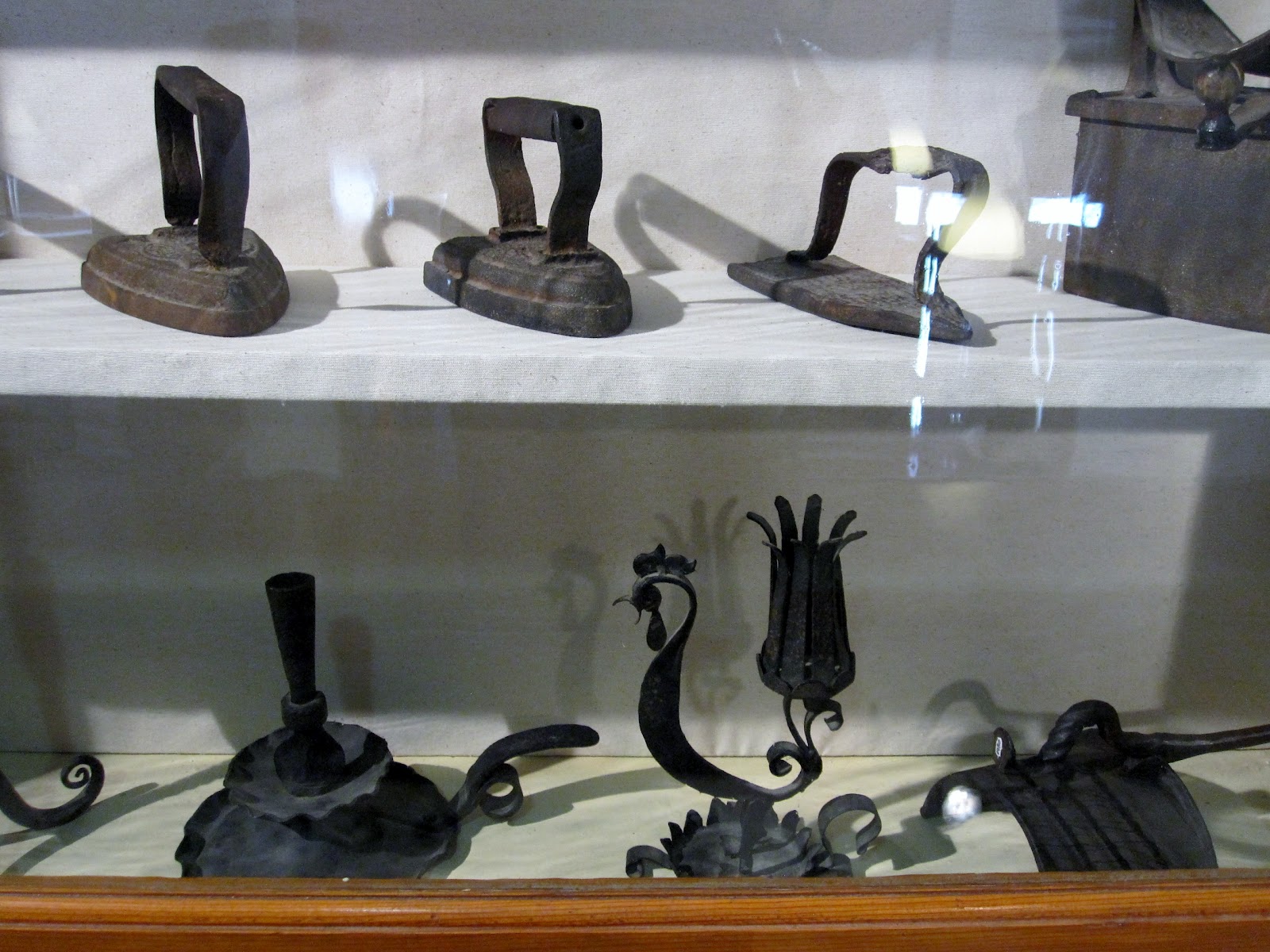
Metalwork
Giant papier mache heads, paraded during the celebration of Corpus Christi

Afterwards, a stroll through the hilly streets of El Rastro will lead you past dozens of vintage furniture and antique stores, as well as photographs, waiting to be shot and framed.   

Across the street: impromptu exhibit

The Museum of Popular Arts and Traditions is open Mon. - Fri. 10-2 & 5-8; Sat. 10-2.

Tuesday, June 12, 2012

Baroque and Beautiful

Museum of the History of Madrid / Museo de Historia de Madrid
06/12/12 – Calle de Fuencarral, 78

When the current renovation is finished, the Museum of History--originally the eighteenth-century Royal Hospice of San Fernando--will cover four centuries of life in Madrid. Until then, we can still enjoy the most head-swiveling doorway in the city.

Pedro de Ribera's Baroque doorway (1726): Alms-house extraordinaire.

A guard told me that part of the permanent collection re-opens at the end of 2012, but the museum won't be fully operational until 2013.  In the meantime it will continue to host temporary, free exhibits on the ground floor. The National Library of Spain has organized Otras Miradas (Other Views, until July 8), with maps of old Madrid, oil paintings, and 3-D topographic models. 

3-D model of Madrid by Leon Gil de Palacio (1830)


The permanent collection will re-open in phases, starting in late 2012

It boggles the mind that this building faced destruction in 1922.  We can thank the Royal Academy of Fine Arts and the Spanish Society of Art-Lovers for intervening.  Muchas gracias.

Tuesday, June 5, 2012

Shopping, Then Stopping: What to See in the Skyscraper

Espacio Fundación Telefónica : History of Telecommunications Museum
06/05/12 - Fuencarral 3

Fan with case, from Salvador Bachiller, 9 euros
I love the way Spanish ladies still use fans to whip up a breeze.  A few weeks ago, my seventh-grader performed in his school play to an audience packed with parents.  As he looked out at the crowd, he noticed that every mother in the room was using a fan, and all the fans waved in unison.  (The play was ambitious for a public school whose only outside activities are chess and boys’ basketball: an adaptation of a novel by Torcuato Luca de Tena, set in a mental institution.  Think King of Hearts meets Nancy Drew, with mod lighting and video clips. My son, the only foreigner, was given a walk-on role as one of the inmates).  I've started to carry a fan wherever I go.  In fact, I’m using one now to deflect the heat rising from my laptop.  Cute and utilitarian—it is the perfect souvenir.  

Telefonica Building
Trendy stores with names like Skunkfunk and Desigual attract all sorts to the shopping street of Fuencarral. I’ve seen the gamut: pierced, tottering, and cutting-edge; school groups in matching t-shirts; transvestites; a ballerina in street-clothes; and yesterday, a French bulldog in a ruffled skirt. After a spell of window- and people-gazing, you might dash into the stunning new cultural space that opened this year in the building that calls itself “Europe’s First Skyscraper.”    

When it was finished in 1929, the American-inspired art deco Telefónica Building was the tallest in Madrid.  It recently added three new (free) exhibit spaces and a gift store, with an entrance on Fuencarral Street number 3.  A sculptural staircase and a glass elevator set the tone for the renovation. 


Lobby and staircase, Fuencarral entrance

On one of the levels, you’ll find a museum of sorts: an exhibit called The History of Telecommunications.  It traces the evolution of remote communication since the nineteenth century.  

1920s linesman bicycle


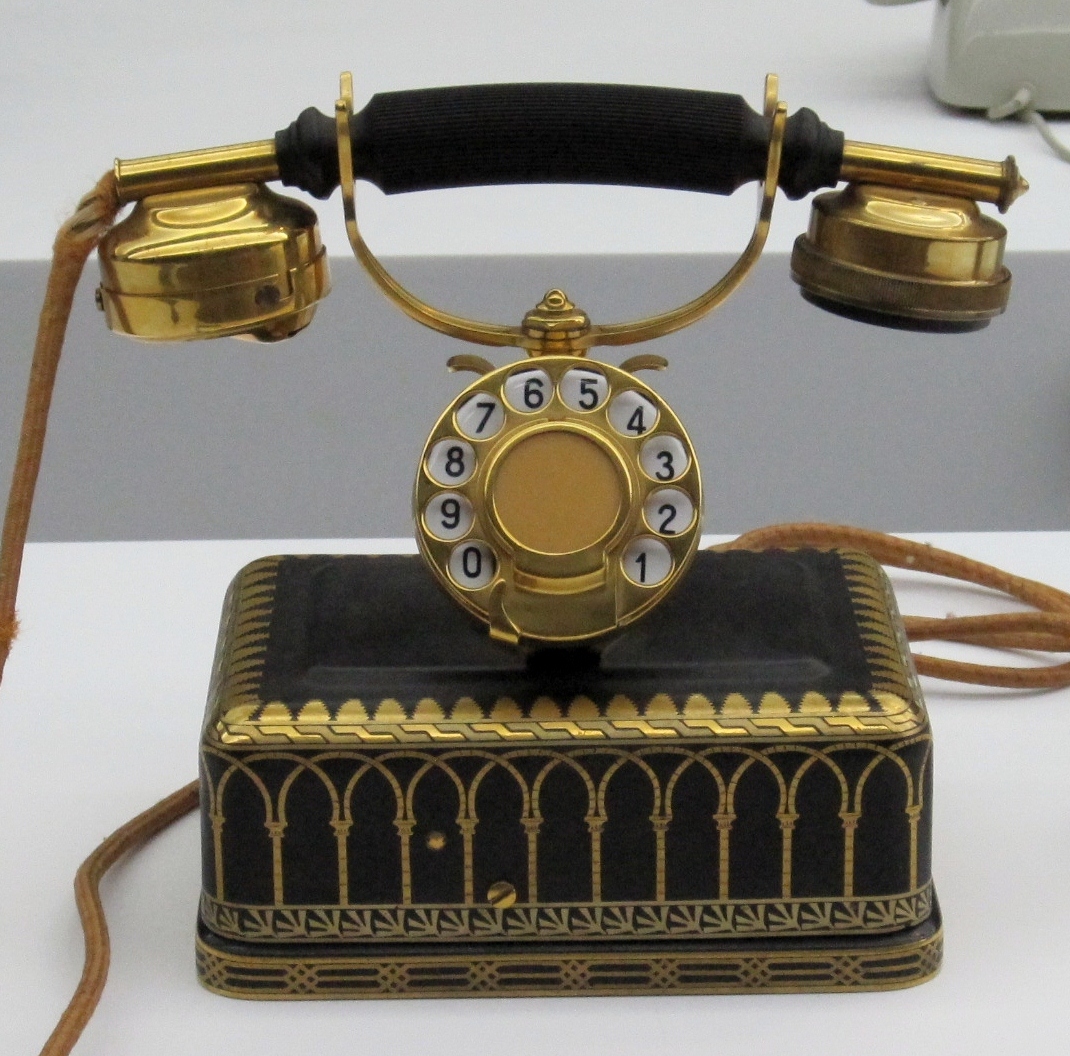
1925 telephone used by King Alfonso XIII to inaugurate new service in Madrid (1926)  and to place the first transatlantic call (1928)


For art lovers, the top level displays the Telefónica Cubist Collection, which revolves around the work of Madrid-born painter Juan Gris (1887-1927).  I couldn’t help peering at the rooftop patio next door.  The views of Gran Via are pretty good as well.

Terraza envy


Gran Via, viewed from fourth level of Telefonica

The middle level currently houses a most intriguing exhibit called “Art and Artificial Life 1999-2012.”  

Philip Beesley, Rob Gorbet (2007, Canada). These "plants" have sensors to detect your presence and move their tendrils.


Robotic blob by Paula Gaetano Adi (2006, Argentina). It sweats when you touch it.

"Head." Ken Feingold (1999, USA)
I found myself all alone in the dark with this lifelike “Head” by American artist Ken Feingold, when it started to talk.  Its eyes blinked and its mouth moved, and it spoke to me in English. “When did you get here?” the Head asked.  I muttered something in response.  

Head continued. “I don’t care about you in the least. Ask me a question.”

I asked about the Wisconsin Governor recall election taking place in my home state today.

“Sorry,” Head said.  “I only understand when I am in another mood.” Silence. Head abhorred a vacuum.  He added, “I never forget a face, but in your case I’ll make an exception.”

The notes said this art work will raise doubts about the coherence of our dialogue with others. And it does.


Hours: Tues - Sun 10:00 - 20:00 (closed M)

Wednesday, May 30, 2012

Free View from the Top: Palace of Cibeles

5/30/12 - Plaza de Cibeles, 1

The Palace of Cibeles (1919) must be one of the most conspicuous buildings in Madrid.  A striking, white confection, it looms over the Fountain of Cibeles (1794) and dominates the Plaza. Since the 1970s, the city's biggest celebrations have taken place in front of the Palace, including the victories of the Real Madrid football team. 

Observation deck is located on the central tower (8th floor).
Enter building through main (arched) doorway.
During the twentieth century, the building was called the Palace of Communications, and served as the main office of the postal, telegraph and telephone services. Impressive mail chutes for all Spain's provinces still line the side of the building that faces Paseo del Prado.


Today, the Palace of Cibeles is both the seat of Madrid's government and a newly-minted cultural space.  In the past decade it underwent extensive restoration.


Photo exhibit on the restoration process, 2008-2011


As I discovered this morning, the main (second) floor is now completely open to the public--walk right in and place your bag in the x-ray machine. Take a look around, visit the cafe, use the restrooms, or fire up your laptop in the wifi zone.  There is also a restaurant and a terrace bar on the 6th floor.

Taking a breather in the public lounge/ wifi zone, Palace of Cibeles

Terrace bar, viewed from the observation deck.


The observation deck or "mirador" has been open since 2011: hours 10:30-1:00 & 4:30-7:30 (closed Mondays and holidays).  Visitors must ask for a ticket at the coat-check counter on the second floor and then ascend to the 6th floor at the appointed time.  I arrived at 11:20 and received a ticket for 11:30.

Most people opt to ascend the final 88 steps on foot--there are more views along the way--but an elevator is provided for those who need one.

Splendid 360-degree view from the 8th floor deck
On the way back down, you can explore the interior . . .

Original tiled marble staircase


Glass block floors


View of main floor 


. . . before continuing on your way. The Naval Musuem is right next door, and the Prado Museum just a few blocks further.  Outside, dozens of chirping school children, dressed in summer hues, strolled down the shady avenue.

Paseo del Prado, in the merry merry month of May

Monday, January 30, 2012

Guns of Spain

Museum of the Civil Guard / Museo de la Guardia Civil
01/30/12 - Calle Guzmán el Bueno, 110

This obscure but diverting museum nestles within the headquarters of Spain's military-status police force. Be prepared to show a passport at the entrance. Once inside the compound's courtyard, you'll walk past a construction site, as well as live examples of military brass, to the museum entrance. Upstairs, hundreds of guns fill the first room of the collection (Sala de Armas): old revolvers, pistols, carbines, rocket-launchers, guns in the form of pens, pearl-handled guns, stiletto-guns, guns confiscated from terrorist groups, and tiny guns from the 1950s that might hide in a satin evening clutch. Not to mention hand grenades, machetes, swords and wavy-bladed daggers.  Looking ahead, the final room has a bicycle from 1914, built to suspend a German Mauser along its frame.

The Civil Guard was created in 1844 to protect travelers from bandits along Spain's wild mountain passes, especially in the southern parts of the country. 


Goya, "Assault of a Coach," 1786-87
The Civil Guard also broke up demonstrations, monitored poaching, and patrolled the borders and the coast. Its role grew in modern times to include foreign peace-keeping missions, anti-terrorism, intelligence, and many other duties. During the Spanish Civil War (1936-39), the Guard split its loyalties down the middle, when almost half supported the rebel forces under general Francisco Franco.

The tricorne hat of the Spanish Civil Guard

The second room presents the history of Civil Guard uniforms, with the help of life-size mannequins. 

Early uniforms.  The striped version was worn in Africa.

Finally, the third room contains miscellaneous objects.  Lining the walls, dozens of miniature dioramas dramatize historical scenes from the lives and deaths--in the line of duty--of the Civil Guard in Spain and the Spanish colonies.  An engraved brass plate describes each scene. For example: a group of Guards in "Equatorial Guinea" (Cameroon) encounters a huge snake; two officers are killed and mutilated in 19th c. Granada by a family of criminals; four officers are killed in Castilblanco when they try to break up an illegal demonstration (31 December 1931); officers are killed by E.T.A. terrorists at a traffic stop (7 June 1968).  The displays are meticulously crafted, down to the smallest fallen branch or piece of broken chair.  In this museum, amidst the weaponry and violence, children will have a field day.

Hours: M-F, 9:00 - 14:00.  Metro: Guzman el Bueno.


Wednesday, January 11, 2012

Saint Isidro and the Woolly Mammoths

Museum of Origins. House of Saint Isidro / Museo de los Orígenes. Casa de San Isidro
1/10/12 – Plaza de San Andr
és, 2
Museum of Origins
The 12th-century farmer and Patron Saint of Madrid, San Isidro, accidentally dropped his baby down a well.  When Isidro prayed for a miracle, the water in the well rose up, delivering the infant unharmed.  The legendary well, or Pozo de San Isidro, is show-cased in a small room of the House of San Isidro.  The connection of this well to Saint Isidro is unclear, since the house at this site actually belonged to Isidro’s master, Juan de Vargas.  The house was rebuilt in the 16th century as a palace, and later served as offices for the Catholic Church.  There are paintings, sculptures and a chapel dedicated to the popular Isidro and his sainted wife, Maria de la Cabeza.* 

Is it or isn't it?

The same building houses the Museum of Origins, which debunks biblical timelines through scientific excavation and study of Madrid’s prehistory.  Numerous archeological sites have been explored along the banks of Madrid’s river, the Manzanares.  The main exhibit begins 500,000 to 120,000 years ago, when aurochs, giant horses and woolly mammoths roamed the area. 

Interactive display, with bones

The first human inhabitants, Homo Heidelbergensis, arrived from Africa about 400,000 years ago, followed by Neaderthals and Homo Sapiens.  They left few bodily remains, but many tools.  The museum interior has been renovated.  A lovely Renaissance style patio and a separate garden area complete the ground-level space.

Courtyard and fountain, Museum of Origins

Upstairs, a temporary exhibit contains a sampling of man-made objects from various periods of Madrid’s development, including a bedroom recreated from the excavation of a 4th c. Roman villa, with the original mosaic floor.  The Museum of Origins is still a work in progress. A second phase of construction promises more exhibits on the history of Madrid, from the first productive societies (9000 – 2100 years ago), Romans and Barbarians (2100-1300 years ago), Islamic Madrid (711-1085 C.E.), and Christian Madrid through the 17th century.
__________________________ 
*According to the story, after this miracle, Isidro and Maria vowed sexual abstinence and lived in separate houses.  (Might this be punishment for the egregious mistake of dropping their baby down a well?)

Sunday, January 8, 2012

Heaven & Earth on Sunday: Goya, Roast Chicken, River

Goya Pantheon, The Church of San Antonio de la Florida
1/8/12 – Glorieta de San Antonio de la Florida, 5

One of Goya's angels
The artist Francisco de Goya y Lucientes (1746-1828), or simply Goya, is growing on me.  He painted the lovely ceiling in the Church of San Antonio de la Florida at the height of his creative powers, in 1798.

According to a pamphlet for sale (1 Euro, 60 pp., available in English), this riverside neighborhood of Madrid has a long history of devotion to St. Anthony of Padova, the Patron Saint of unmarried girls.  On his feast day June 13, maidens arrived at St. Anthony’s shrine to ask for a husband.  They dropped thirteen pins into the holy water and dipped their hand to see how many pins would stick to it.  The number foretold their suitors for the year.  One can see the holy water font where this activity once took place, in the vestibule of the Church of San Antonio.  The neoclassical-style building was a royal chapel until 1881, when it became a parish church.  To protect Goya’s frescoes, the church turned into a museum in 1929.  An identical church—for worship and yearly romantic divination—was built next door.  

Goya's tomb and his frescoes lie within this neoclassical church
Goya died in France, but his remains were transferred to San Antonio de la Florida in 1919 (mysteriously, his skull was missing).  Thus, in one visit, homage can be paid to both artist and his creation.  

The frescoes are remarkable for several reasons.  Some elements of Goya’s style prefigure Impressionism, not to mention Goya’s creepy series of Black Paintings in the Prado.  The highest point, the cupola, contains an earthly instead of a heavenly scene.  Goya depicts a story from St. Anthony’s life, when the Saint’s own father was wrongly accused of murder.  St. Anthony brings the corpse to life—a miracle—for questioning, and the dead man proclaims the father’s innocence.  Onlookers in the scene are dressed as Goya’s contemporaries, from beggars to gossiping ladies.  The luminous angels that decorate the vaults have been excoriated for their secular appearance—they might be beauties of Madrid high society, in sashes and diaphanous dresses. 

After admiring Goya, we stepped across the street to the venerable cider-and-chicken house, Casa Mingo, a fixture of the neighborhood since 1888.*  

Casa Mingo, side view
Casa Mingo serves its own fermented cider, along with spit-roasted chicken, in a bustling restaurant.  On a Sunday, try to arrive before 2 p.m., when the line for tables can spill out the door.  Son 1 was intrigued by the sparse occupational duties of the chicken guy—impale, stack, roast in flames, remove. Three chickens served the 5 of us. 

Casa Mingo dining room

Afterwards, a stroll back to the train station, along Madrid's Manzanares River, was just the ticket.   


Manzanares River

In winter, the banks are almost empty. A lone fisherman cast his line.
 
______________________________________
*This expedition to Goya’s pantheon and Casa Mingo was first suggested to me by Kay, a long-time Madrid aficionada and Madison, Wisconsin resident.