Tuesday, June 5, 2012

Shopping, Then Stopping: What to See in the Skyscraper

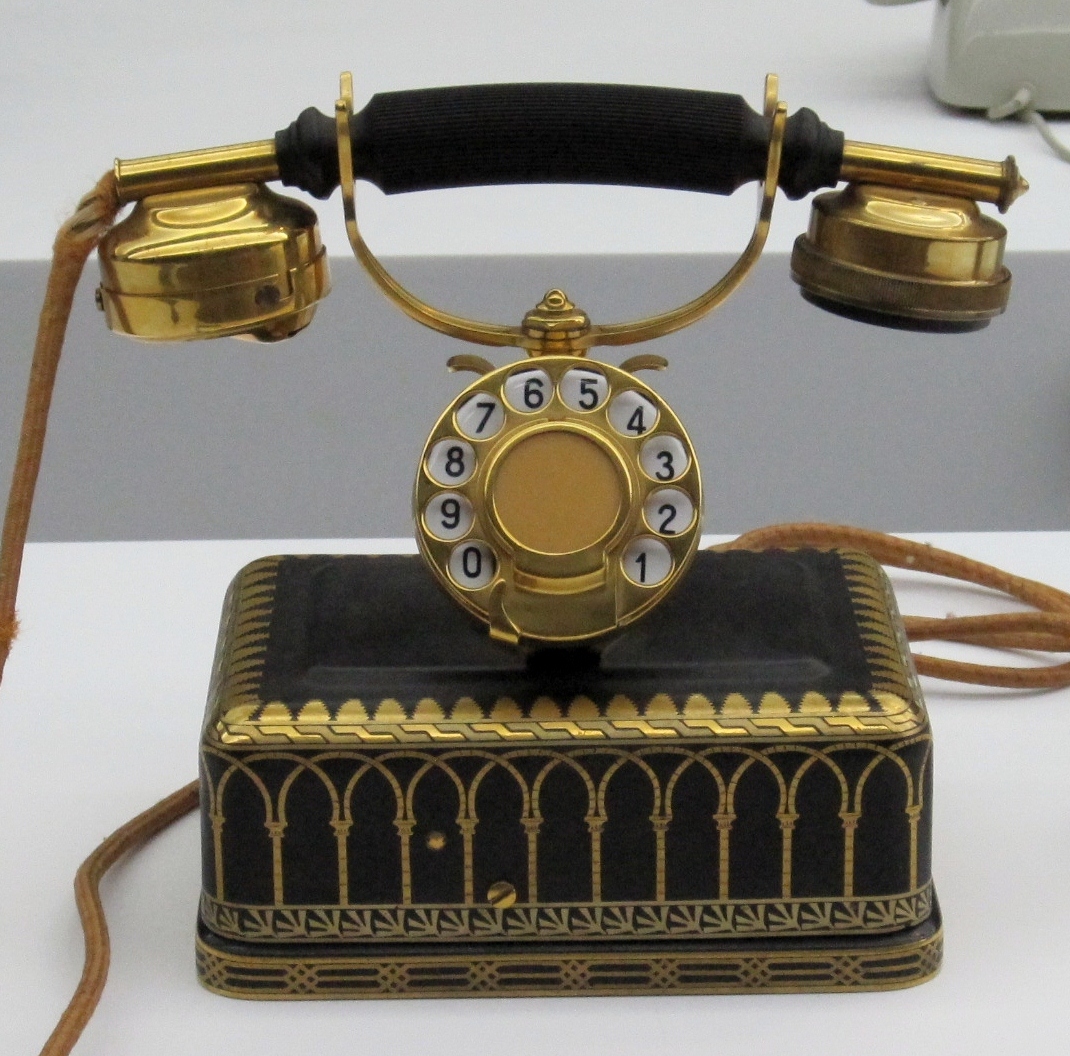
Espacio Fundación Telefónica : History of Telecommunications Museum
06/05/12 - Fuencarral 3

Fan with case, from Salvador Bachiller, 9 euros
I love the way Spanish ladies still use fans to whip up a breeze.  A few weeks ago, my seventh-grader performed in his school play to an audience packed with parents.  As he looked out at the crowd, he noticed that every mother in the room was using a fan, and all the fans waved in unison.  (The play was ambitious for a public school whose only outside activities are chess and boys’ basketball: an adaptation of a novel by Torcuato Luca de Tena, set in a mental institution.  Think King of Hearts meets Nancy Drew, with mod lighting and video clips. My son, the only foreigner, was given a walk-on role as one of the inmates).  I've started to carry a fan wherever I go.  In fact, I’m using one now to deflect the heat rising from my laptop.  Cute and utilitarian—it is the perfect souvenir.  

Telefonica Building
Trendy stores with names like Skunkfunk and Desigual attract all sorts to the shopping street of Fuencarral. I’ve seen the gamut: pierced, tottering, and cutting-edge; school groups in matching t-shirts; transvestites; a ballerina in street-clothes; and yesterday, a French bulldog in a ruffled skirt. After a spell of window- and people-gazing, you might dash into the stunning new cultural space that opened this year in the building that calls itself “Europe’s First Skyscraper.”    

When it was finished in 1929, the American-inspired art deco Telefónica Building was the tallest in Madrid.  It recently added three new (free) exhibit spaces and a gift store, with an entrance on Fuencarral Street number 3.  A sculptural staircase and a glass elevator set the tone for the renovation. 


Lobby and staircase, Fuencarral entrance

On one of the levels, you’ll find a museum of sorts: an exhibit called The History of Telecommunications.  It traces the evolution of remote communication since the nineteenth century.  

1920s linesman bicycle


1925 telephone used by King Alfonso XIII to inaugurate new service in Madrid (1926)  and to place the first transatlantic call (1928)


For art lovers, the top level displays the Telefónica Cubist Collection, which revolves around the work of Madrid-born painter Juan Gris (1887-1927).  I couldn’t help peering at the rooftop patio next door.  The views of Gran Via are pretty good as well.

Terraza envy


Gran Via, viewed from fourth level of Telefonica

The middle level currently houses a most intriguing exhibit called “Art and Artificial Life 1999-2012.”  

Philip Beesley, Rob Gorbet (2007, Canada). These "plants" have sensors to detect your presence and move their tendrils.


Robotic blob by Paula Gaetano Adi (2006, Argentina). It sweats when you touch it.

"Head." Ken Feingold (1999, USA)
I found myself all alone in the dark with this lifelike “Head” by American artist Ken Feingold, when it started to talk.  Its eyes blinked and its mouth moved, and it spoke to me in English. “When did you get here?” the Head asked.  I muttered something in response.  

Head continued. “I don’t care about you in the least. Ask me a question.”

I asked about the Wisconsin Governor recall election taking place in my home state today.

“Sorry,” Head said.  “I only understand when I am in another mood.” Silence. Head abhorred a vacuum.  He added, “I never forget a face, but in your case I’ll make an exception.”

The notes said this art work will raise doubts about the coherence of our dialogue with others. And it does.


Hours: Tues - Sun 10:00 - 20:00 (closed M)

Wednesday, May 30, 2012

Free View from the Top: Palace of Cibeles

5/30/12 - Plaza de Cibeles, 1

The Palace of Cibeles (1919) must be one of the most conspicuous buildings in Madrid.  A striking, white confection, it looms over the Fountain of Cibeles (1794) and dominates the Plaza. Since the 1970s, the city's biggest celebrations have taken place in front of the Palace, including the victories of the Real Madrid football team. 

Observation deck is located on the central tower (8th floor).
Enter building through main (arched) doorway.
During the twentieth century, the building was called the Palace of Communications, and served as the main office of the postal, telegraph and telephone services. Impressive mail chutes for all Spain's provinces still line the side of the building that faces Paseo del Prado.


Today, the Palace of Cibeles is both the seat of Madrid's government and a newly-minted cultural space.  In the past decade it underwent extensive restoration.


Photo exhibit on the restoration process, 2008-2011


As I discovered this morning, the main (second) floor is now completely open to the public--walk right in and place your bag in the x-ray machine. Take a look around, visit the cafe, use the restrooms, or fire up your laptop in the wifi zone.  There is also a restaurant and a terrace bar on the 6th floor.

Taking a breather in the public lounge/ wifi zone, Palace of Cibeles

Terrace bar, viewed from the observation deck.


The observation deck or "mirador" has been open since 2011: hours 10:30-1:00 & 4:30-7:30 (closed Mondays and holidays).  Visitors must ask for a ticket at the coat-check counter on the second floor and then ascend to the 6th floor at the appointed time.  I arrived at 11:20 and received a ticket for 11:30.

Most people opt to ascend the final 88 steps on foot--there are more views along the way--but an elevator is provided for those who need one.

Splendid 360-degree view from the 8th floor deck
On the way back down, you can explore the interior . . .

Original tiled marble staircase


Glass block floors


View of main floor 


. . . before continuing on your way. The Naval Musuem is right next door, and the Prado Museum just a few blocks further.  Outside, dozens of chirping school children, dressed in summer hues, strolled down the shady avenue.

Paseo del Prado, in the merry merry month of May

Sunday, May 20, 2012

Legends of Fish Street


me llaman puta, también princesa
me llaman calle, es mi nobleza
me llaman calle, calle sufrida,
calle perdida de tanto amar

--Manu Chao, “Me llaman calle”

05/20/12 - Calle del Pez
A fish story, with lots of photos

Early last fall, at the beginning of our stay in Madrid, the Professor and I stumbled around the barrio of Malasaña until at last we found a street sign for Calle del Pez (Street of the Fish, pronounced "Peth"). We met up with friends in the tapas bar El Pez Gordo, or The Fat Fish.  By midnight, the place was busting at the seams, and the evening was barely getting started.


For a very short street--400 meters--Calle del Pez is long on legends.  Over the course of the year, I learned about several of them: the quaint origin of the street’s name; a sordid tale of cloistered nuns, demonic possession and the intervention of the Spanish Inquisition; King Felipe IV’s passion for a beautiful young nun from the same convent—and the Velazquez masterpiece he commissioned to atone for his sin.  

Calle del Pez also contains a surviving example of a sixteenth-century Casa a la malicia (spite house), and appears in Pío Baroja’s 1911 novel The Tree of Knowledge (El arbol de la ciencia), as well as the acclaimed 1997 film Open Your Eyes (Abre los ojos). The singer Manu Chao immortalized street-walkers on Calle del Pez in a 2007 music video filmed in a local bar, the Palentino.

I can’t get enough of this street. 

Riffs on fish are everywhere...


A bar on Calle del Pez


The Lucky Fish, State Lottery No. 361


Hostal of the Blue Fish


Darwin store sign


I *think* this means "The Fishbowl" (twee accessories shop)
Sea creatures


Entry way detail


Sixteenth-Century Spite House

Start at the corner of Calle San Bernardo (near metro Noviciado) and walk east on Calle del Pez.  On your left, a university student carries books to class in perpetuity. I call her the sultry scholar (the best kind, and not an oxymoron). 

The sultry scholar of Calle del Pez
After paying your respects, look across the street at number 31, a store selling religious figurines.  This small building is one of Madrid’s 1,000 known Casas a la malicia, houses modified in the late sixteenth century to hide extra living space beneath their rafters.

The sloping roof at number 31 purportedly conceals extra rooms.

When King Felipe II moved the court from Toledo to Madrid in 1561, accommodations for the influx of new arrivals were scarce.  Until more residences could be built, landlords were required to offer up any space above the first floor (second floor in U.S. parlance), or suffer fines.  To deter unwelcome strangers, owners resorted to all kinds of trickery to fool the eye.  You can find more photos of spite houses in this blog entry from Pasión por Madrid.   The Museum of the City (Museo de la Ciudad) also has scale models of Casas a la Malicia.

The Name

Before the seventeenth century, this thoroughfare was called Street of the Cleric’s Fount (Calle de la Fuente del Cura). The area contained springs and ponds filled with colorful fish.  When the property passed into the hands of D. Juan Coronel, his daughter Blanca was delighted by the fish.  But subsequent construction on the property caused the fish to die.  When only one fish remained, Blanca placed it in a bowl.  It died as well, and Blanca was bereft.  In its memory, Coronel had a fish carved into the façade of their house.  The original house is long gone, but the fish remains, and can be spied on the building at the corner of Calle del Pez and Calle Jesús de Valle.  

Look carefully or you will miss it.
Blanca eventually joined the nearby order of Benedictine nuns, which brings me to the next saga…

Strange Doings at the Convent of San Plácido

Scandal the First. I’ve come across several accounts of this case, none annotated and each more lurid than the last.  My recap tries to steer a middle ground, if such a thing exists. The convent was founded in the year 1623 at Calle San Roque 9, adjacent to Calle del Pez.  

If walls could talk. Convent of San Placido, seen from Pez.

A few years later, not long after the arrival of a new confessor named Juan Francisco García Calderón, one of the nuns began to exhibit unusually violent states of rapture.  One by one, all but four of the 30 nuns succumbed to fits of extreme behavior.  Calderón declared them to be possessed, and embarked on an ambitious regime of exorcisms to rid their bodies of demons.  Suspicions arose when folks pointed out that the only nuns immune to Lucifer were old and unattractive.  The Holy Office caught wind, and ordered the entire group to Toledo, where they were placed for two years in the prison of the Inquisition.  Eventually, the nuns were recognized as the victims of an unbalanced confessor.  (Was fish-lover Blanca among them?)  They scattered to different convents, their prioress returned to San Plácido, and Calderón remained imprisoned.  

Convent at left, view down Calle San Roque.

Scandal the Second. Not long after this incident, King Phillip IV of Spain heard the news that a surpassingly beautiful young woman had just taken vows in the Convent of San Placido.  With the help of his friend Don Jerónimo, the neighbor and patron founder of the convent, the King built a secret passage through a coal cellar, and finagled a series of assignations with Sister Margarita.  The prioress of the convent, unable to stop the courtship due to the complicity of Jerónimo, took matters into her own hands: Margarita was decked out in black, staged as a corpse in a coffin with burning candles and crucifix, and presented as dead.  When the men arrived that night, they were shocked by the vision, and high-tailed it back to the house next door.

The King met with his confessor, and soon after presented the convent with a splendid clock that tolled the hours.  He also instructed his court painter Velázquez to paint the famous canvas known as “Cristo de Velázquez” (c. 1632).  The painting belonged to the convent for several hundred years, until it was given to the Prado, where it still hangs today.  The clock disappeared in 1903 during renovation of the building. 

Calle del Pez Today

In Pío Baroja’s novel about the provincialism of Spain, The Tree of Knowledge (1911), the enterprising but ill-fated Lulu opens her own sewing shop on Calle del Pez.  She’s a proto-feminist who enchants the cynical protagonist Andrés Hurtado (alas, also ill-fated).  Today, the neighborhood of Malasaña is undergoing a kind of funky gentrification after years of gritty neglect.  The stores along Calle del Pez illustrate this change.  Where prostitutes and junkies once roamed, we now see trendy dress shops and tapas bars…and a pair of ruby slippers, worn by Lulu in her dreams.    


There's no place like Calle del Pez.

Friday, May 11, 2012

It's a Bloody Mystery


Royal Monastery of the Incarnation / Real Monasterio de la Encarnación
05/11/12 – Plaza de la Encarnaci
ón

The Royal Monastery of the Incarnation was established in 1611, a few years after the Monastery of the Barefoot Noblewomen.  In olden times, a passageway from the nearby Royal Palace allowed the royal family to visit and worship at their convenience. The monastery conducts 1-hour guided visits in Spanish. 
  
Royal Monastery of the Incarnation

The guide told us that 10 nuns still live in the cloister today, hidden from view.  A revolving wooden counter set in an interior wall--identical to the “torno” for convent sweets at the Convent of Corpus Christi--functions as their portal of communication with the outside world.  How I would like to interview one of those nuns, or at least send a list of written questions through the wall!  

What's it like to never leave?
As the guide whisked us from room to room, she pointed out religious figures in time-darkened paintings; statues of the virgin wearing real outfits of embroidered silk; and the royal visages of Spain’s pallid, pursed-lipped Austrian monarchs.  At one point the guide chastised a hapless man who strayed several meters from the group.  Perhaps he too was trying to get a glimpse of a living being amongst the Stations of the Cross.  The windows onto the courtyard, it turns out, have opaque glass.  
 
The paintings and sculptures are not as impressive as those in the Monastery of the Barefoot Royals, and the rooms are not as lavish. My favorite painting showed a nun laid out in her coffin, covered in flowers; the guide said it was a rare illustration of the convent’s funerary tradition.  A huge painting of a biblical wedding scene shows a banquet table laden with empanadas. A life-sized 17th century sculpture by Gregorio Fernandez, of the reclining Christ covered in blood, is all too realistic.  The final station for our group, a room chock full of saintly relics, might be worth the price of admission (7 euros).  


St. Pantalemon, usually portrayed as a mop-top

From floor to ceiling, the walls are lined with artfully displayed bone chips, the arms of eight martyrs, and the leg of St. Margaret.  A reliquary with a glass orb contains the solidified blood of St. Pantalemon, a Christian healer from the early fourth century.  According to legend, he was tortured mercilessly and then beheaded for performing miracles on sick people instead of treating them in the normal way—normal for Greek doctors in the year 303 CE, that is.  

Every year on July 27, the day of St. Pantalemon’s death, the reliquary is carried to the Baroque church next door and displayed to the public, as well as broadcasted on closed-circuit TV monitors.  On that day only, the blood in the orb is said to turn from a solid to a liquid before your eyes.  As luck would have it, we leave Madrid for home on July 27, and will not be here to see it.

Tuesday, April 24, 2012

Adventure in the Cloister, or, How to Buy Sweets from Invisible Nuns

Monastery of Corpus Christi / Monasterio del Corpus Christi
04/24/12 - Plaza del Conde de Miranda, 3

A Step-by-Step Guide to Buying "Dulces del convento"

In college, I was startled to see a flock of nuns in full habit out for a jog on New York’s Riverside Drive, their white veils flapping in the breeze.  I grew up far from nuns, in a southern California beach town that seemed to exist outside time.  While it’s true that I fled the land of lotus-eaters in order to attend an all-female school in New York, I was lured by Barnard’s location, rigor, and scholarship aid.  I can't imagine renouncing the secular world or the company of men, whom I find delightful much of the time.  Still, I can admire the good works of nuns around the world, as they tend to the poor, the powerless, and the sickest among us. The Vatican’s recent crackdown on American nuns for their devotion to issues of social justice shows how completely out of touch it has become.
  
I wrote earlier about the art collection in Madrid's Monastery of Barefoot Noblewomen, a cloistered order in which only two dozen nuns remain.  Another cloister has resided in the Monastery of Corpus Christi (also known as Las Carboneras) since the year 1605. 

Church entry, Plaza Conde de Miranda, 3 (doorway to sweets is at R, not shown)
To help support themselves, the nuns bake traditional sweets, which they sell while hidden behind a wooden turnstile within the convent. The recipes, it is said, have been passed down through the ages from the time of the Romans and the Moors.  Here is the buying process as I found it today:

1. Once I arrived at the set of carved wooden doors to the right of the church entrance, I rang the top bell, marked monjas (nuns).  When a voice answered, I stated my business, “Dulces, por favor,” and a nun buzzed me in. 

Ring the bell on the right side

2. I proceeded through a dim corridor that led to a small, open courtyard.

Go straight through doorway


Almost there
3. Then I passed through another short hallway, a small open space, and at last a doorway where a revolving counter is set into the left wall.

The price list for sweets is posted. A friendly, self-appointed Roma lady might be present to guide you through the process. Her Spanish was as rudimentary as mine, but I didn’t mind her assistance--nor could I avoid it!

Today's selection of sweets


4. A disembodied voice behind the wall addressed us and the nun placed the selection of sweets upon a revolving counter (the torno), then turned it until the items appeared on our side of the wall.  I told her I’d like one of each, and placed the money on the counter.  The nun turned the counter yet again, and she tallied the total aloud in a wavering voice.  “She’s really old,” the Roma lady informed me, as the voice started to tabulate a second time.  I pictured a four-foot nun of about one hundred and ten.  My change arrived, another group entered, and I left with my sweets: a box of starry pastas de almendra, and a bag of galletas, lightly scented with lemon.


Arrival of the dulces

Tea time. Crisp sugar biscuits (L) and chewy almond sweets

S1 and S2: the testers

After all that, how did they taste, you ask?  -- ¡Riquísimo!


Wednesday, April 18, 2012

Hand-Made in Spain, for Peasants and Queens

Royal Tapestry Factory / Real Fábrica de Tapices
04/16/12 - Calle Fuentarrabía, 2

We have the same taste
Just last weekend, I finally entered the renowned house of espadrilles Casa Hernanz (Calle de Toledo, 18), accompanied by two friends.  After determining our place in the ragged line, we mentally recorded the styles and colors we wanted to try.  The espadrilles (or, as the Spanish call them, alpargatas) may not be stitched entirely by hand, but they are made the old way, and still a bargain. The pair in this picture was 12 euros. 

At the other end of the cost spectrum, the Royal Tapestry Factory fulfills custom orders at a dignified pace, much as it has done since the early 18th century, when King Phillip V started a factory in Madrid with the help of Belgian master weavers. The current factory, a brick building near the Atocha train station, has been in operation since the 1880s. It contains a museum with a half-hour guided tour for 4 euros.


The museum tour lets you watch highly-skilled artisans at work (no photos allowed, but you can view the process from home in this 3-minute video).  In fact, we stood inches from the blue-smocked workers. We observed their fingers flying, and heard the thump of their mallets as they tamped down woven threads.  My tour group of inquisitive middle-aged Spanish ladies even engaged the artisans in banter. 

Tapestry based on a Goya illustration, Royal Tapestry Factory

One can only guess at prices.  Four people will labor for two years to make a tapestry that covers an entire wall.  The carpets I saw were too gorgeous to tread upon, even in virgin alpargatas.